
5 Ultimate Differences Between Physical Therapy and Assisted Stretching (And When You Need Each)
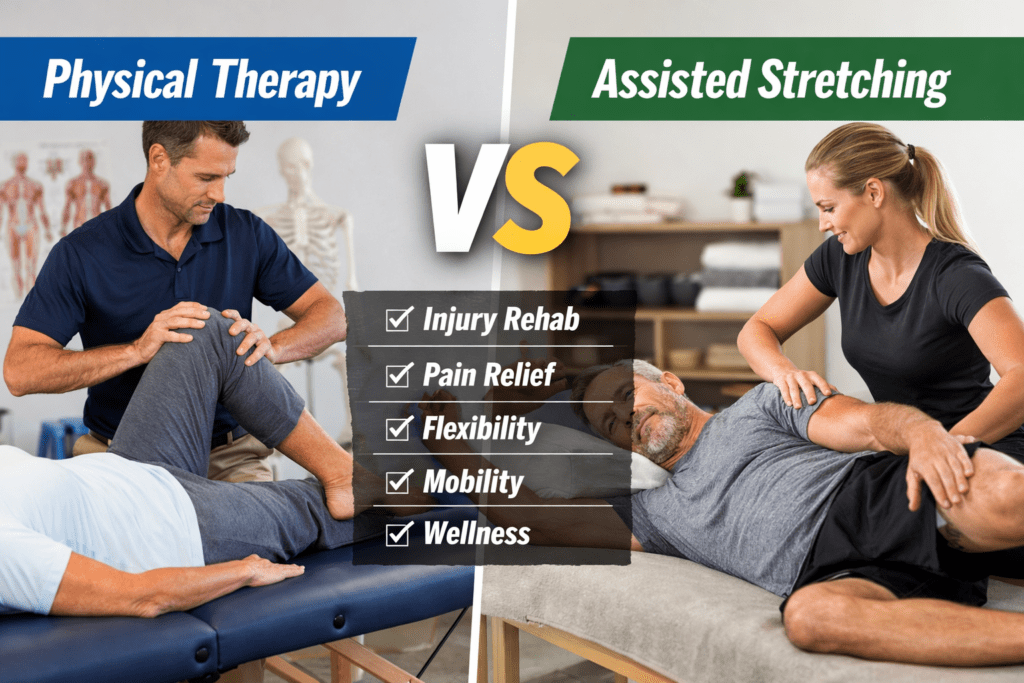
If you’ve ever searched for ways to improve mobility, reduce pain, or recover from activity, you may have wondered about the difference between physical therapy vs assisted stretching. While both services focus on movement and function, they serve different purposes — and knowing when you need each can help you make the right decision for your body.
At Agility Physical Therapy & Sports Performance in Venice, FL, we offer both traditional physical therapy and our clinically informed Agility Stretch & Recovery sessions. Here’s what separates them — and how to know which is right for you.
1 Powerful Difference: Injury Treatment vs Mobility Optimization
The biggest distinction in the physical therapy vs assisted stretching conversation is intent.
Physical therapy is a medical service designed to diagnose, treat, and rehabilitate injuries or medical conditions. A licensed physical therapist evaluates movement dysfunction, pain patterns, and underlying musculoskeletal or neurological issues before building a treatment plan.
Assisted stretching, on the other hand, focuses on mobility, muscle tension reduction, and nervous system regulation. It is ideal for individuals looking to improve flexibility, enhance performance, or maintain progress after therapy — not diagnose or treat medical conditions.
If you are dealing with acute pain, post-surgical recovery, vertigo, sciatica, or a work injury, physical therapy is the correct starting point.
2 Essential Difference: Medical Evaluation vs Performance-Based Assessment
Physical therapy begins with a comprehensive medical evaluation. Therapists use objective measurements, functional testing, and clinical reasoning to determine a diagnosis and treatment path. Insurance documentation and progress tracking are part of the process.
Assisted stretching sessions include a focused mobility assessment but do not involve medical diagnosis or rehabilitation protocols. Instead, sessions are designed to enhance flexibility, reduce tightness, and improve neuromuscular control.
This difference is critical when comparing physical therapy vs assisted stretching — one is medical treatment, the other is performance and recovery support.
3 Proven Difference: Rehabilitation vs Prevention
Physical therapy treats existing injuries and helps patients recover safely. It addresses pain sources, muscle imbalances, joint dysfunction, and post-operative needs such as Total Hip Replacement (THR) or Total Knee Replacement (TKR).
Assisted stretching supports injury prevention. It helps active adults, athletes, golfers, pickleball players, and event professionals maintain healthy movement patterns and reduce strain before it becomes an injury.
According to the American Physical Therapy Association (APTA), early intervention and proper movement mechanics are key factors in preventing long-term dysfunction.
Understanding physical therapy vs assisted stretching allows individuals to be proactive instead of reactive.
4 Ultimate Difference: Insurance-Based Care vs Self-Pay Recovery Service
Physical therapy is typically covered by insurance and requires medical necessity documentation. It is regulated healthcare delivered by licensed providers.
Assisted stretching is a self-pay wellness service. It is adjunctive — meaning it complements care but does not replace physical therapy. At Agility, Stretch & Recovery sessions are clinically informed and delivered in a professional setting, but they are not medical treatment.
This makes assisted stretching ideal for:
- Active adults wanting mobility support
- Athletes seeking recovery sessions
- Individuals discharged from physical therapy
- Professionals on their feet all day
5 Essential Difference: When to Choose Each
Here’s a simple guide to help decide in the physical therapy vs assisted stretching decision:
Choose Physical Therapy If You:
- Have ongoing pain or an injury
- Recently had surgery
- Experience dizziness, vertigo, or nerve symptoms
- Were referred by a physician
Choose Assisted Stretching If You:
- Feel tight but not injured
- Want to improve flexibility
- Need recovery support between workouts
- Have completed physical therapy and want maintenance care
In some cases, individuals benefit from both services at different stages of their movement journey.
Serving Venice, FL and Surrounding Communities
Agility Physical Therapy & Sports Performance proudly serves patients from across Sarasota County. With three convenient Venice locations — Wellen Park, Southbridge, and Pinebrook — our team provides comprehensive outpatient care and clinically informed recovery services.
Agility Physical Therapy & Sports Performance
📍 Venice, FL (Wellen Park • Southbridge • Pinebrook)
📞 (941) 584-8320 | (941) 244-2410 | (941) 484-8107
🌐 https://improvemyagility.com
You can learn more about our physical therapy services here.
Or explore our Stretch & Recovery program here.
Frequently Asked Questions
1. Is assisted stretching a replacement for physical therapy?
No. Assisted stretching is adjunctive and does not replace medical treatment or rehabilitation.
2. How do I know if I need physical therapy first?
If you have pain, recent surgery, or a diagnosed condition, consult a physician or licensed physical therapist.
3. Can assisted stretching help prevent injuries?
Yes. Improved mobility and neuromuscular control may reduce strain and support healthier movement patterns.
4. Is a referral required for assisted stretching?
No referral is needed for Stretch & Recovery sessions.
Take the Next Step Toward Better Movement
If you’re unsure whether physical therapy vs assisted stretching is right for you, our team can help guide you. Every individual is different, and medical advice should always be sought from a licensed physician or healthcare provider when appropriate.
Ready to improve your mobility, recover smarter, or address persistent pain?
👉 Schedule an evaluation or contact our team today:
https://improvemyagility.com/contact/
Your movement matters — and the right service at the right time makes all the difference.
Array